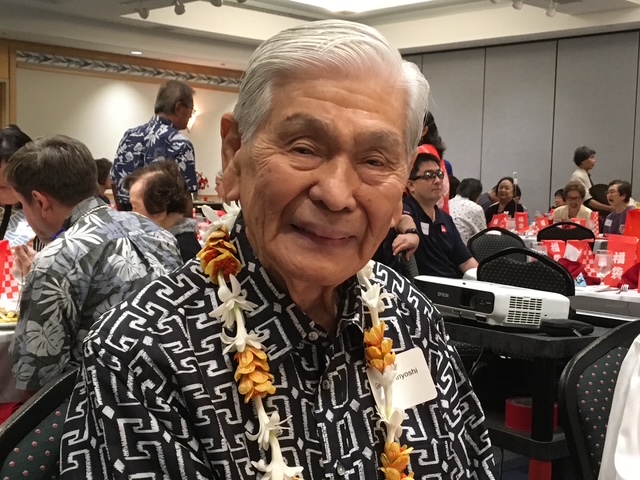
The passing of former Hawai‘i Governor George Ryoichi Ariyoshi on April 19, 2026, at the age of 100 in many respects closes the chapter on an era rich in American history. Ariyoshi, America’s oldest living governor at the time of his passing, was much more than a successful politician: He brought valuable life experiences and character values to his governorship.
Ariyoshi was America’s first governor of Asian ancestry and Hawai‘i’s first non-white chief executive. He had grown up living character values imbued in him by his immigrant parents — values that helped to guide his work and relationships as governor and as a man.
Soon after entering the University of Hawai‘i, he was drafted into the Military Intelligence Service and served in occupied Japan after its surrender. The experience gave him valuable insight into war’s impact on people’s lives and inspired him to work at building bridges of friendship and understanding. Ariyoshi was the only Hawai‘i governor who could communicate fluently in a second language — Japanese — earning him the respect and trust of government, business and community leaders in Japan.
So, Ariyoshi’s passing represents not simply the loss of a former governor, but the sun setting on one of the last of journalist Tom Brokaw’s “Greatest Generation.”
The Territory of Hawai‘i that George Ariyoshi was born into on March 12, 1926, bore little resemblance to the Fiftieth State from which he passed away. When he was born, the vast majority of Hawai‘i’s non-white working-class population – people like his father Ryozo and mother Mitsue, immigrants from the Japanese prefectures of Fukuoka and Kumamoto, respectively – had few avenues to transcend their socioeconomic class. Thus the story of George Ariyoshi’s journey from blue-collar neighborhoods in Chinatown and Kalihi to the enchanting refinement of Washington Place illustrates how a history-changing social movement, personal determination, and the support of family and friends converged to help him break through the so-called bamboo ceiling that had characterized the Islands’ political structure.
Despite representing about 40 percent of the territory’s total population in the 1920s, Hawai‘i’s Japanese lacked political and economic power in the first half of the 20th century. That meant low wages on the sugar plantations could be kept low with workers forced to endure oppressive working conditions year after year. Huge profits raked in by the plantation owners did not trickle down to the immigrant workers. Instead, the rich got richer and even more powerful. Plantation laborers tried to organize for better pay and working conditions, but the labor strikes in 1909 and 1920 won them only modest improvements as well as derision from those who wanted to prevent changes in Hawai‘i’s established social order that kept the lower classes from moving upward.
“I tell people I’m not a plantation child, so I was not exposed to some of the prejudices and biases that existed on the plantation. … I felt free to play and get along, and even fight, with other people of different backgrounds, which was very different from what I found when I became an adult and saw the control of the ‘Big Five,’” Ariyoshi shared in a July 2012 zadankai, or “talk story,” with four Nisei contemporaries: U.S. Senator Daniel Inouye; former University of Hawai‘i president Dr. Fujio Matsuda; the Reverend Yoshiaki Fujitani, former bishop of the Honpa Hongwanji Mission of Hawaii; and attorney Ted Tsukiyama.
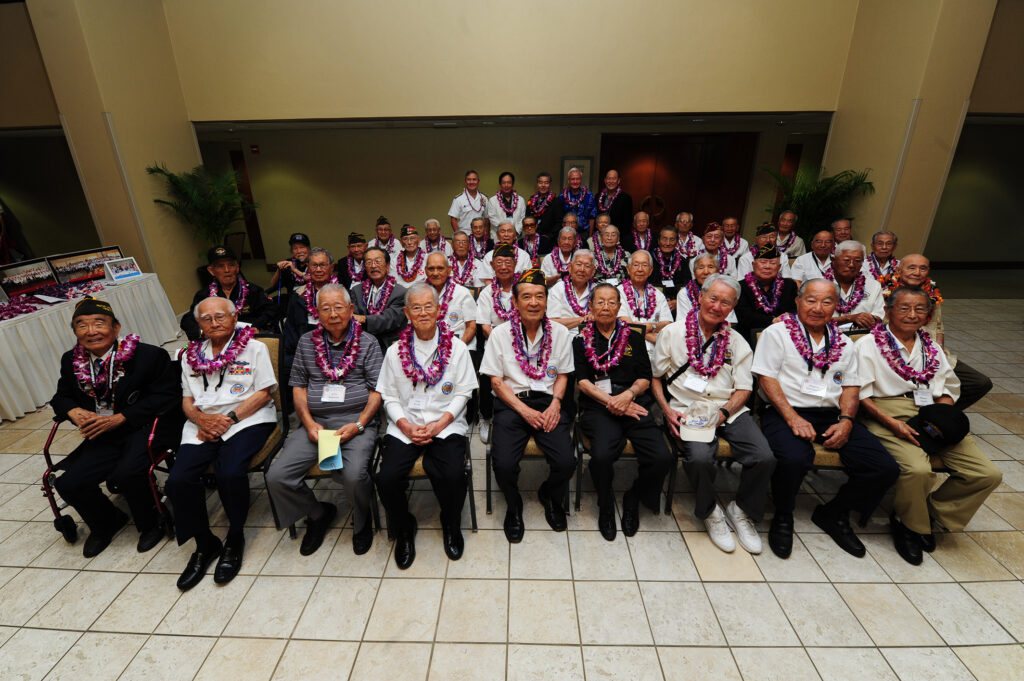
All five were World War II veterans: Inouye, Matsuda and Tsukiyama had volunteered for the 442nd Regimental Combat Team; and Ariyoshi and Fujitani had used their Japanese language skills as translators and interpreters in the Military Intelligence Service. (Tsukiyama was later transferred to the MIS.) Additionally, Ariyoshi, Fujitani, Inouye and Matsuda were McKinley High School grads. Ariyoshi was his senior class president in 1944.
They were joined in Sen. Inouye’s Hawai‘i office by U.S.-Japan Council president Irene Hirano Inouye, Bishop Ryokan Ara of Tendai Mission of Hawaii and former Consul General of Japan Yoshihiko Kamo for a discussion on the Nisei generation. Ara and Kamo, both Japanese nationals, felt there was something unique about the Nisei generation’s contributions to Hawai‘i and wanted to hear their perspectives.
Governor Ariyoshi, who was the eldest of six children, said his parents were “very protective” of him from a young age. “Whenever I went anyplace, I had to let my mother know where I was going and, from there, if I was going someplace, I had to come back and let my mother know I was going to go someplace else.”
His close relationship with his parents imbued in him character values that his parents had themselves grown up with and brought from Japan – values such as otagai (mutual obligation) and the importance of not bringing haji – shame — upon their family. He also learned to gaman, to always persevere.
From his parents he learned to be pragmatic. “I think the term, ‘Shikata ga nai’ is very important — you do what you have to do, but there are some things you can’t help and you don’t stay set and upset about that,” Ariyoshi shared with the zadankai group.
“The word that was taught to me that was very important was okagesama de,” Ariyoshi said. He believed the value was more than an expression of gratitude. Okagesama de acknowledges that “there were many other people who have helped to produce what you did,” he said. Ariyoshi also observed that acknowledging the help of others oftentimes inspires others to offer their help.
Ryozo and Mitsue Ariyoshi also taught their son humility. “My parents always used to tell me that no matter how good you are, it is not possible to do things by yourself. You need to have a lot of other people helping you. So, they used to tell me, ‘Don’t boast about what you are achieving; always acknowledge that there were many others who were helpful’ — teachers who were not always there at the particular time, but teachers who were very helpful in training you, helping you get to the point you are.”
Ariyoshi said that when he was elected lieutenant governor in 1970 and later, governor, he began hearing others use the term “okagesama de,” prompting him to think about its origins. “I think each of us, if we stop and think, must have done some things and whatever you did must have been impacted by values that were taught by our parents” and could “be of great value to any person, no matter what the background might be.”
Although he did not grow up in a plantation environment, in time, Ariyoshi recognized the disadvantage he faced due to his socioeconomic class, ethnicity and lack of generational privilege that social elites enjoyed. From an early age he recognized that if you were poor and the child of a non-white immigrant or even Native Hawaiian or Pacific Islander parents, you were all but locked out of the halls of social power in Hawaii. But as a bright and hardworking child, George Ariyoshi refused to accept that as his fate. He knew the status quo wasn’t fair and believed that true social justice meant equal opportunities for everyone.
Working to right that injustice had to wait while Ariyoshi served his country in World War II. Japan surrendered just as Ariyoshi was completing basic training. He was nevertheless sent to MIS Language School at Fort Snelling, Minn., and then sent to Tokyo to serve with the Occupation forces. The experience impacted his life and contributed to shaping him the man he became.
While serving as an interpreter at the NYK Shipping Lines Building in Tokyo, Ariyoshi met a seven-year-old shoeshine boy whom he wrote about in his essay in the book, “Japanese Eyes, American Heart: Personal Reflections of Hawaii’s World War II Nisei Soldiers.” The boy told him about the lack of food after the war. Although American military personnel had been instructed not to give food to the Japanese, Ariyoshi felt sorry for the boy. He knowingly disobeyed the regulation and gave him a slice of bread on which he had spread butter and jelly. He wrapped it in a napkin and gave it to the boy. Instead of eating the bread, the boy placed it in his shoeshine box.
“Why are you putting the sandwich away? Aren’t you hungry?” he asked. The boy replied that he was indeed very hungry, but he was taking the sandwich home for his three-year-old sister.
From then on, whenever Ariyoshi went to the post exchange, he always bought two hamburgers — one for himself and one for the shoeshine boy.
Ariyoshi returned to Hawai‘i after the war. He had been attending the University of Hawai‘i prior to his MIS service. Now eligible to attend school on the GI Bill, he decided to transfer to Michigan State University, where he earned his bachelor’s degree in history and political science in 1949. He then began pursuing his juris doctorate at the University of Michigan.
In 1951, just before starting his last year of law school, his father told him that while working as a merchant seaman in 1919, he had jumped ship at Honolulu Harbor and had been living in Hawai‘i as an illegal alien. The younger Ariyoshi said he was “flabbergasted.” “Papa, weren’t you concerned during the war that they were going to come and pick you up?” he asked his father. Ryozo Ariyoshi responded that he was worried and that although he assumed he would be arrested, luck was on his side and it never happened.
In his autobiography, Ariyoshi noted that Congress passed the Walter-McCarran Act in 1952, amending the U.S. immigration law to allow people who could prove continuous residence since 1924 to become legal residents. The first legal action George Ariyoshi took after passing the Hawai’i Bar Exam was to legalize his father’s resident status under the Walter-McCarran Act.
“After that, he did not need to worry. For the first time, he held a passport, which allowed him to leave Hawai’i and return to Hawai‘i. Thereafter, he took many trips to Japan.”
Ariyoshi credited his predecessor, Governor John A. Burns, for getting him involved in politics just as he was launching his legal career. At the time, other World War II AJA veterans — people like Daniel Inouye, Spark Matsunaga and Masato Doi — were also running for office.
Burns questioned him about his childhood and prejudice. “I told him I did not live on the plantation so I’m not familiar with the prejudice that you folks talk about. He told me, ‘OK, how about now — now that you’re working?’” After some thought, Ariyoshi decided to toss his hat into the ring, as well.
At the zadankai discussion, Ariyoshi acknowledged that the discrimination experienced by non-whites in Hawai‘i was different from the blatant discrimination of Japanese Americans on the continental U.S. “Fortunately, in Hawai‘i, we didn’t have that kind of experience, even though as I grew up, I began to look at the economy and look at jobs and began to become very concerned about the control that the Big Five had over the economy of Hawai‘i.” That reality, he said, motivated people like himself to get involved in politics beginning with the historic 1954 “revolution” that brought Democrats to power in Hawai‘i.
Around this time, he met and married Jean Hayashi. They were married on Feb. 5, 1955. She supported her husband throughout his lengthy political career, beginning with his election to territorial House of Representatives in 1954, followed by the territorial and state Senate from 1958. The three Ariyoshi children — Lynn, Ryozo and Donn – were born along the way.
In 1970, John Burns, who was first elected governor in 1962, tapped Ariyoshi to be his lieutenant governor running mate. The Burns-Ariyoshi team was victorious. Just two years into their term, however, Burns was diagnosed with colon cancer and Ariyoshi became Acting Governor. Governor Burns never returned to office and died in April of 1975. Ariyoshi completed his term and then ran for governor in 1974. Ariyoshi was elected to two full terms with Nelson Doi, Jean Sadako King and John Waihe‘e III, respectively, as his lieutenant governors. He was the state’s longest-serving governor. A two-term limit for governor was subsequently enacted.
Ariyoshi’s last term as governor was marked by the election of John David Waihe‘e III, who subsequently was elected governor.
In 1981, Fukuoka Prefecture in Japan became Hawai‘i’s first sister state. It was a relationship Ariyoshi supported wholeheartedly and especially so because his father had emigrated from Fukuoka.
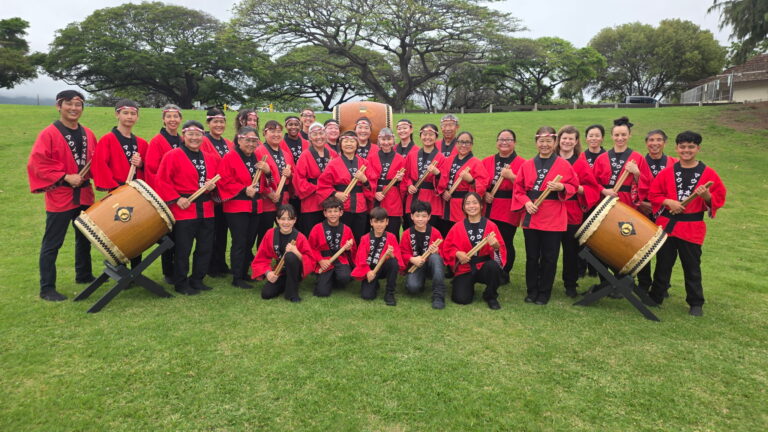
Even after retiring from active political life, Ariyoshi was always an honored guest at the Hawaii Fukuoka Kenjin Kai’s New Year’s shinnenkai, where he was often asked to install the club’s officers and directors. It was a role he took seriously.
Ariyoshi had continued to travel to Japan after leaving office and even late into his eighties. He had established and maintained many government, business and social relationships in Japan, believing that the bilateral ties between the United States and Japan were not merely about diplomacy, but rather about friendship and goodwill.
Before administering the oath of office, he always reminded the officers — and the kenjinkai members, too — of the important people-to-people role they play in furthering the relationship between Hawai’i and Fukuoka. It was what he envisioned when he approved Hawai‘i’s sister state relationship with Fukuoka in 1981.
“The [Hawai‘i Fukuoka] Kenjin Kai can play an important role in fostering that relationship on a people-to-people level. You have a responsibility to further the relationship,” Ariyoshi said at the 2020 shinnenkai, which was held just before the Covid pandemic outbreak.
In an April 21, 2026, interview following Ariyoshi’s passing, former Governor John Waihe‘e III, told KITV that Ariyoshi was “very much an internationalist” who “worked on Japan, Korea, and all of these places to make sure that we had ties for tourism and just cultural exchanges.” He described Ariyoshi as “a visionary” who planned for the future while managing the present, adding that through his governorship, he “helped steer Hawai‘i through the waves of changes.”
Said Waihe‘e: “He was concerned about the out-migration, or what we now call the diaspora. He was very passionate, and he tried to express it by creating what were called the State General Plans. So he actually wanted a preferred future of some kind. He was understated, but extraordinary.”
In April 2020, Karleen Chinen retired as the Editor of The Hawai‘i Herald after 16 years of leading the semimonthly publication that covers Hawai‘i’s Japanese American community. Her book, Born Again Uchinanchu: Celebrating Hawai‘i’s Chibariyo! Story, chronicling Hawai‘i’s Okinawan community from 1980 to 2000. Chinen previously served as a consultant to the Japanese American National Museum and was part of the JANM team that took its traveling exhibition, From Bento to Mixed Plate: Americans of Japanese Ancestry in Multicultural Hawai‘i, throughout the neighbor islands of Hawai‘i and to Okinawa for its international debut in November 2000.
Kevin Y. Kawamoto is a former associate professor at the University of Hawaiʻi at Mānoa and currently works at the UH Mānoa Center on Aging. He has written or co-written a number ofacademic textbooks and has been a freelance writer for more than 30 years.