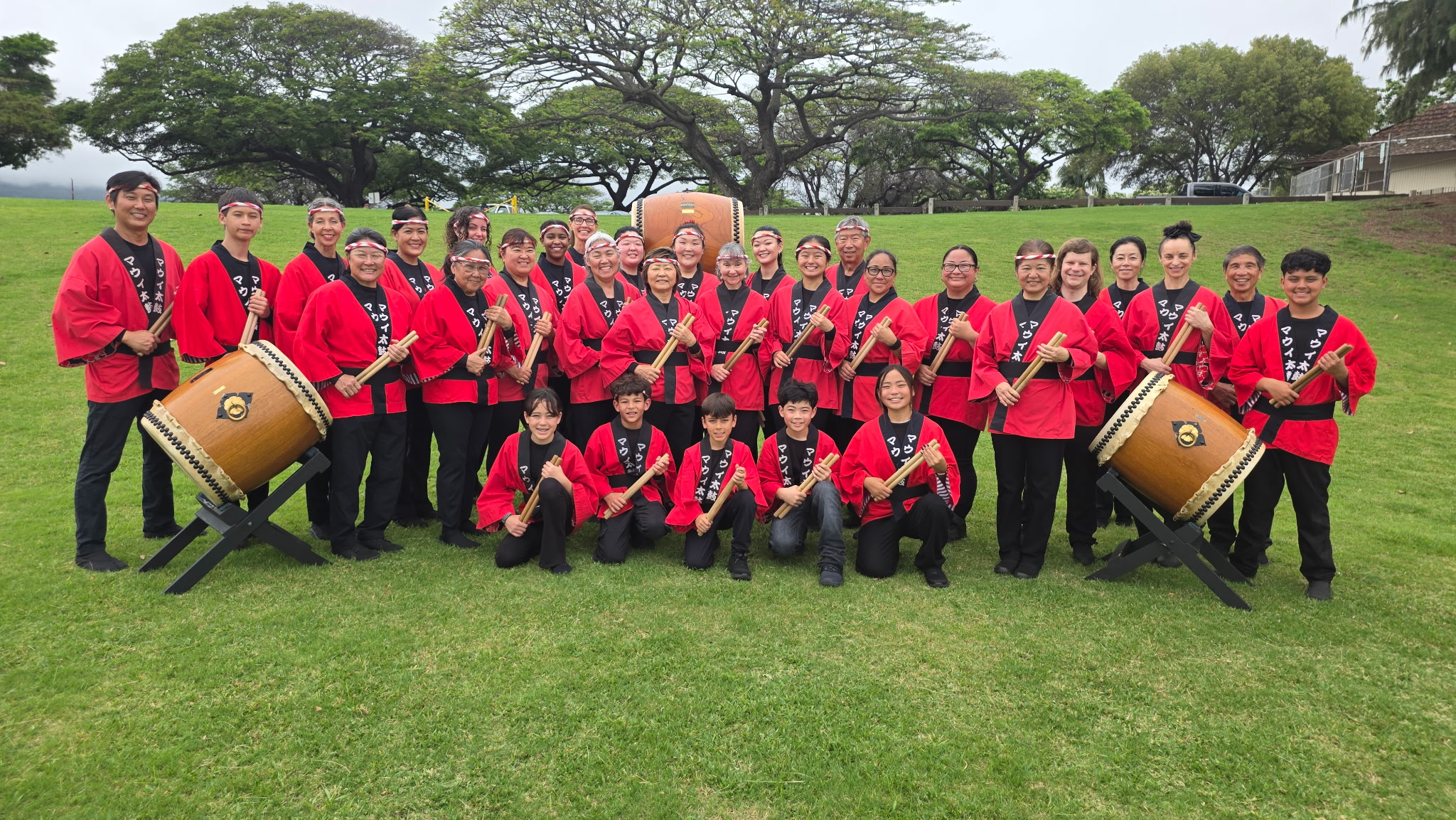
“When you do an Obon you bring all your ancestors to you, you dance with them and honor them.” — Kay Fukumoto
The 2018 documentary “Bon-Uta, a Song from Home” captures what is so special about Maui Taiko and its founder and leader Kay Fukumoto. Maui Taiko is celebrating its 30th anniversary this year and at its heart is Fukushima Ondo, a song that evokes hard days working on the plantation and long nights of revelry and remembrance.
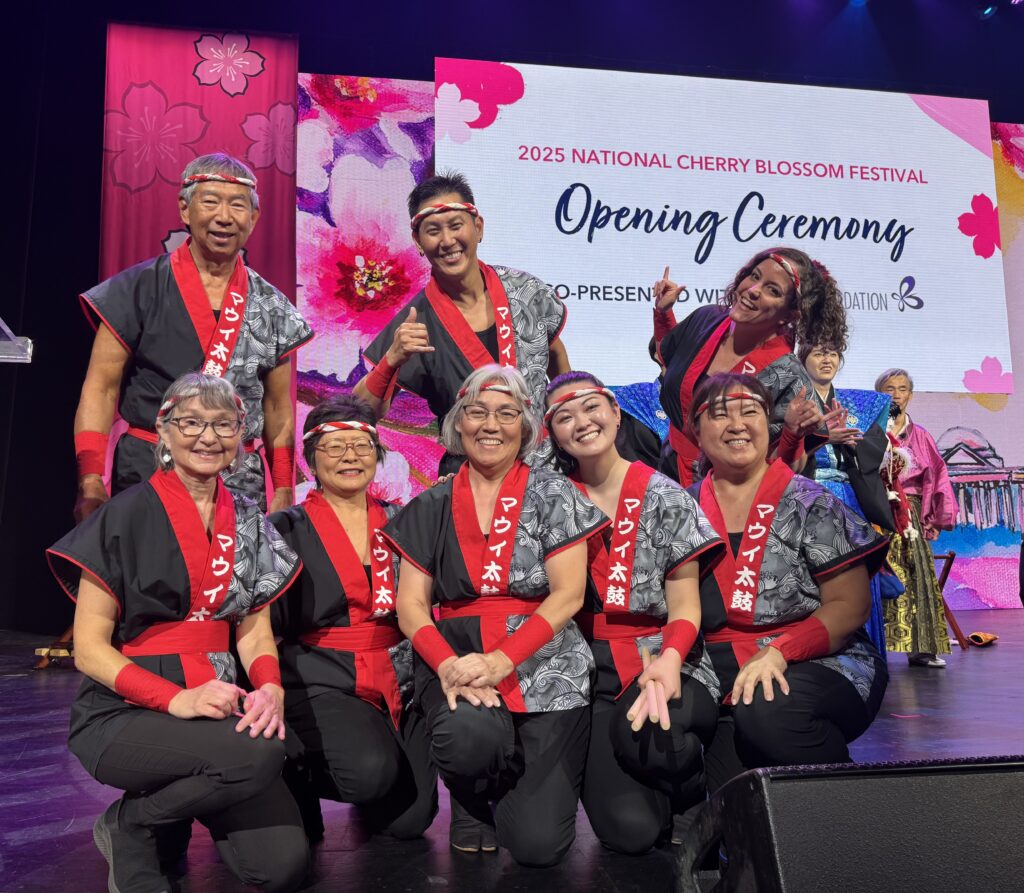
Every summer at temples on Maui, the sounds of Fukushima Ondo resonate, with the drummers of Maui Taiko performing for the wide circle of dancers. Fukumoto is the heart of Maui Taiko; her family was involved in the tradition of taiko on Maui for more than 100 years.
“My great-grandfather Tomijiro Watanabe came from Japan and along with friends started Fukushima Ondo. The song describes friendship, the obon season, the circle of life. Obon is alive, festive, evolved, multigenerational,” Fukumoto said.
Like so many of his generation, Tomijiro immigrated to Hawaiʻi and labored on the HC&S Sugar Plantation, raising a family and sharing cultural traditions from Japan. Obon was so important to the Keāhua camp community that they pooled their resources to build a yagura and purchase a taiko. When the plantation closed, the yagura and taiko were donated to the Pāʻia Mantokuji Mission.
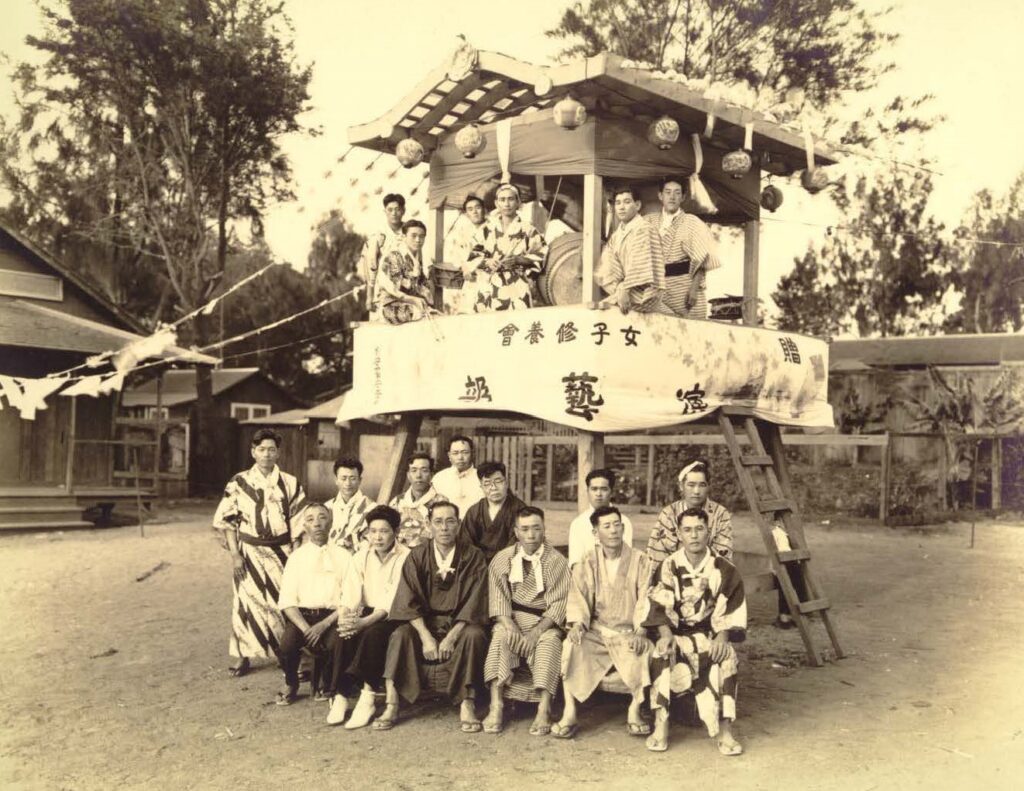
As a little girl, Fukumoto heard stories of the nights of Obon festival: Fukushima Ondo was performed for hours by the men of the plantation. Her father Albert played the fue. An old black-and-white photo shows the men, many in cotton yukata, proudly posing next to the yagura.
“Back in the day only men were allowed on the yagura,” Fukumoto recalled. “They were having a good ole’ time, the music getting livelier as the night went on.”
In 1970, at just 10 years old, Fukumoto became the first woman or girl to play the taiko at the obon. She is one of the earliest women in Hawaiʻi to perform taiko in an obon group.
Maui Taiko was founded as a nonprofit in 1996 with 15 members: it has always been a family affair. Husband Ronald, is the leader drum maker and was recognized in 2019 with the prestigious Nihon Bunka Award by the Japanese Cultural Society of Maui. Son Mitchell started playing alongside his parents when he was just 3 years old. Today he is a performing member of San Jose Taiko, an internationally recognized taiko ensemble.
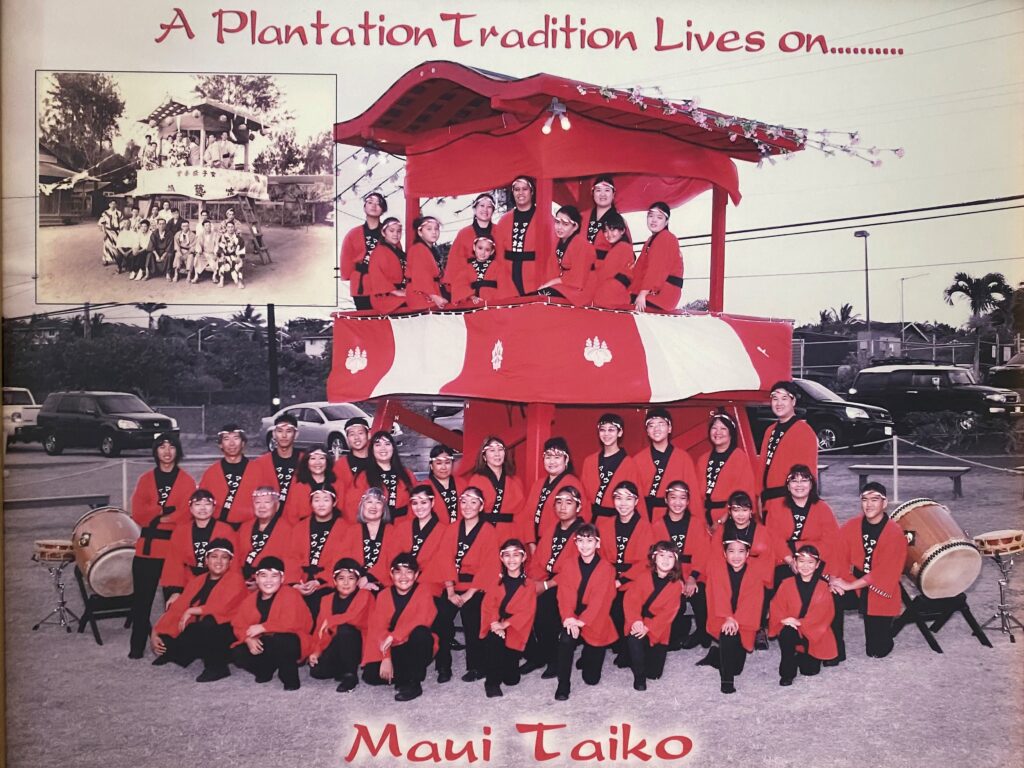
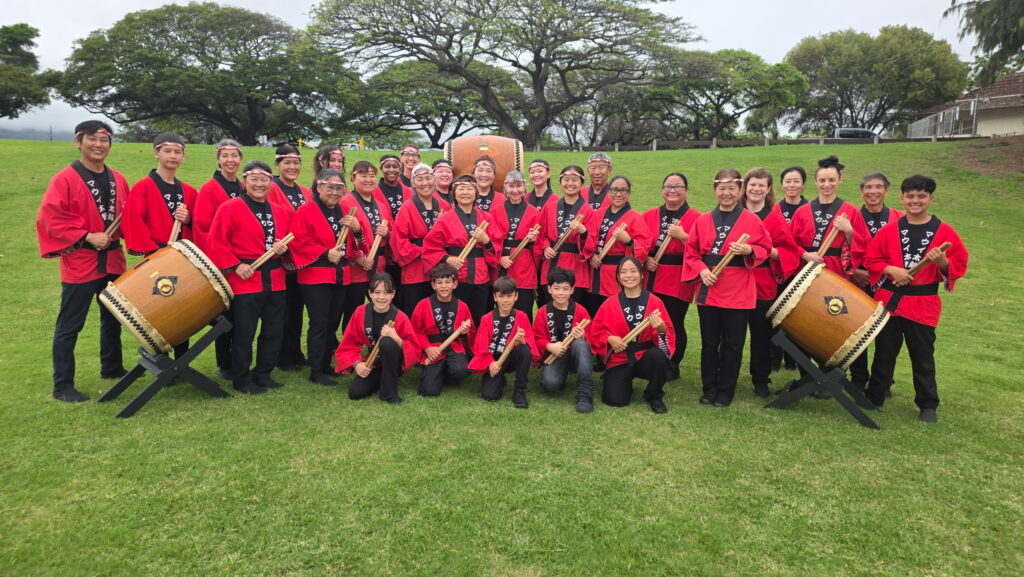
A photo taken of Maui Taiko shows how times have changed: still performing on the yagura from Keāhua, they are a diverse gathering of performers of all ages and ethnicities. They practice at the Kahului Community Center Annex where they also teach taiko workshops. Fukumoto estimated that Maui Taiko performs more than 50 times a year at events such as the Maui Marathon held in April.
In February, Maui Taiko performed alongside San Jose Taiko at Taiko Swingposium, sharing the ways taiko brought hope to incarcerees during World War II.
“All of us are volunteers, trying to juggle it all,” said Fukumoto.
Connecting the Circle
Sometimes a song is more than just a song, it is home.
Maui Taiko has been a home for many in moments of joy and sadness. As Fukushima Ondo has connected generations, it has become a bond that has offered solace in difficult, tragic circumstances both in Maui and Japan. This year marks the 15 years since the 2011 tsunami and nuclear disaster that severely impacted Fukushima Prefecture.
In 2008, Maui Taiko traveled to the region as part of its Maui Taiko Aloha Tour of Japan. Filmmakers documented as Fukumoto traveled with the group, visiting sites such as Hiroshima, where they placed paper cranes at the statue to Sadako and also her ancestral home in Fukushima Prefecture, where they performed Fukushima Ondo. An elderly man, with short wooden bachi, joined in for the performance.
“Ours is more lively, Americanized,” she said. “We sensed that the ancestors were there when we performed. It was powerful to feel connected: here we brought Fukushima Ondo back to Japan.”
Another film, “Bon-Uta, a Song from Home,” directed by Yuji Nakae, the film traces the journey of people from Futaba, a town in Fukushima, to Maui to share their obon song. They were forced to abandon their homes in 2011 and since then they have been scattered, unable to return, but they are able to connect to home through their shared cultural traditions.
The residents of Futaba find that the people of Maui have continued the traditions of Bon Odori that they were forced to abandon. Since their meeting, Maui Taiko built a drum out of a keyaki log donated to them and continues to perform Futaba Bon Uta, ensuring its survival. The film compares Futaba’s struggles to the Issei generation that toiled on the plantations.
“Because all these people came, we learned the song, we learned the song and performed it in Paia with their drum in hopes of carrying on this legacy for them,” she said, “There were tears shed, recognizing that their lives have moved on and they had to leave a legacy with us.”
Last summer, two years after the devastating fires in Lāhainā, Maui Taiko was part of a special homecoming. On Aug. 8, 2023, Lahaina Jodo Mission, Shingon Mission and Lahaina Hongwanji Mission were destroyed in the fire. The three collaborated and returned to the grounds of Lahaina Jodo Mission for the Lahaina Obon Festival for a special gathering.
Maui Taiko was among the groups to return to the sacred site where they had performed for so many years: providing a steady drumbeat of hope, resilience and remembrance.
“We were really close with all the churches, we had been playing for them for 20 years so when all this happened and we lost three of them, it was emotionally, psychologically devastating. We were all hurting because of friends losing their spiritual home.”
“A lot of families lost their family homes, the homes they had for decades that were passed down to them,” Fukumoto said. She is also an active member of the Japanese Cultural Society of Maui. They have pitched in to help families restart and reclaim traditions. The society has fundraised to help give people happi coats, kimono and yukata.
Like the Issei pioneers, there is solace in the most difficult times of finding community in culture and traditions.
“Only through tragedy do you really understand what you lose,” Fukumoto said.
For Fukumoto, the steady beat of the taiko represents something enduring: the ability of people to rebuild, reconnect and remember. Whether honoring plantation ancestors, supporting wildfire survivors or helping preserve traditions from Fukushima, Maui Taiko continues to remind audiences that even after hardship, there is still music, dance and fellowship waiting in the circle.