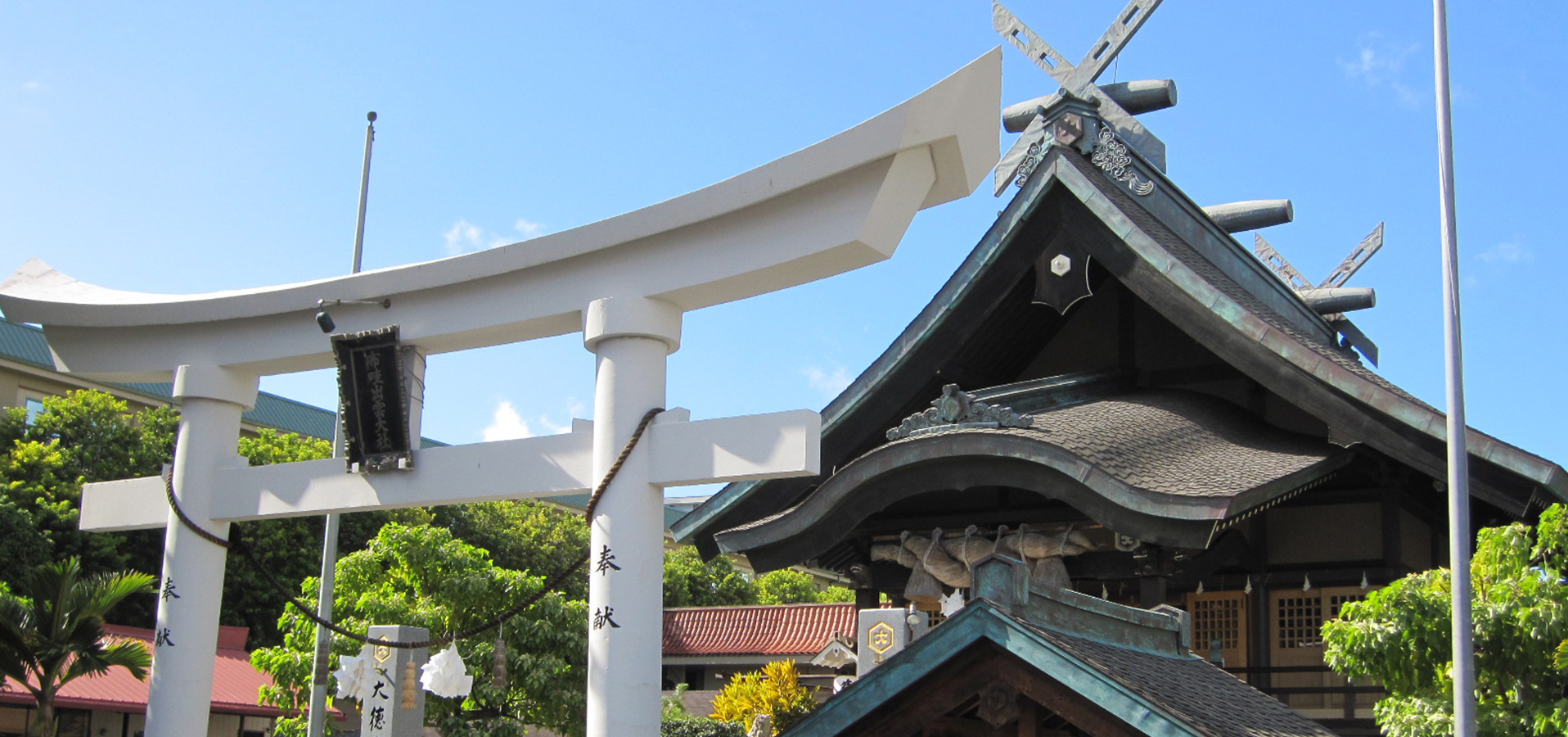
For 120 years, Izumo Taishakyo Hawaii, also known as Hawaii Izumo Taisha, has stood as more than a place of worship. It has been a gathering place, a source of comfort and celebration, and a link connecting generations in Hawaiʻi to their Japanese heritage.
For third-, fourth- and fifth-generation Japanese Americans today, that connection may look very different from what it did for their immigrant ancestors. Yet the shrine’s history tells a larger story—one of immigration, war, perseverance, community and adaptation.
A Shrine Takes Root in Hawaiʻi
Although the first Japanese contract laborers, known as the Gannenmono, arrived in Hawaiʻi in 1868, large-scale Japanese immigration began in 1885. Many immigrants came from Hiroshima, Yamaguchi, Fukuoka and other areas of western Japan, relatively close to the original Izumo Taisha in Shimane Prefecture.
As Japanese immigrants established new lives in Hawaiʻi, they brought with them not only their language and customs, but also their spiritual traditions. Those who followed the teachings of Izumo Taisha, however, had no place in Hawaiʻi where they could gather and practice their faith.
That began to change with Katsuyoshi Miyao.
Miyao, the first head priest of Hawaii Izumo Taisha, was born in Hiroshima, near Shimane Prefecture. Aware of Izumo Taisha’s popularity and of the many Hiroshima residents immigrating to Hawaiʻi, he came to the islands in 1906 and received strong support from the Japanese immigrant community.
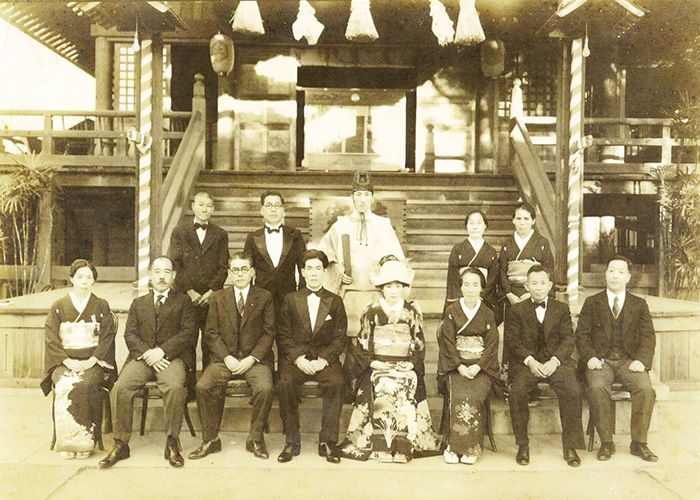
By 1907, construction of the shrine building in Pālama was completed.
With a permanent home established, the congregation developed activities that would take root for decades. Among them was the autumn festival, or aki matsuri, featuring entertainment and community celebrations.
The shrine became part of the rhythms of immigrant life in Hawaiʻi—a place where faith, culture and community came together.
War Changes Everything
That life came to an abrupt halt with the beginning of World War II.
The government forced the shrine to close, and second head priest Shigemaru Miyao was arrested and sent to an internment camp on the U.S. mainland. His father, Katsuyoshi Miyao, had died in 1935. He had lived long enough to see his son succeed him as head priest in 1931, but was spared witnessing the upheaval that would soon affect his family, the shrine and Hawaiʻi’s Japanese community.
The war fundamentally changed Japanese religious institutions throughout the islands.
Before the war, approximately 60 Shinto shrines existed across Hawaiʻi. As the pioneer Issei declined in number, the Nisei worked to preserve what their parents had established. By the third generation, however, only about 10 Shinto shrines remained.
Izumo Taisha faced its own struggle for survival.
After Shigemaru Miyao was released from internment, the shrine property remained under government control. The congregation borrowed a warehouse and established a temporary place to resume its activities while hoping that its original property would eventually be returned.
The struggle lasted 10 years and required a petition bearing 10,000 signatures before the shrine regained the right to reestablish itself.
By then, however, circumstances surrounding the original property had changed, and plans were underway for a City project. Ultimately, the shrine moved to its present location in December 1968.
Just weeks later, on Jan. 1, 1969, worshippers were welcomed to the new location for Hatsumode, the traditional first shrine visit of the New Year.
After everything the shrine and its congregation had endured, it was a remarkable new beginning.
Faith as Part of Everyday Life
For many Japanese families, religious traditions have historically overlapped rather than existed within strict boundaries. It is not unusual, for example, to visit both Shinto shrines and Buddhist temples during the New Year season.
At a Shinto shrine, people may come to pray during important moments in their lives or whenever they feel a need for spiritual support.
That tradition continues at Izumo Taisha Hawaii.
New Year’s remains an especially important opportunity for the shrine to reconnect with the community. Visitors who may come only once a year—or perhaps for the first time—can learn that the shrine’s role extends well beyond Hatsumode.
Throughout the year, Izumo Taisha offers ceremonies and blessings marking life’s milestones, including blessings for newborns and children, homes and new cars.
Across generations, those occasions become part of a family’s story.
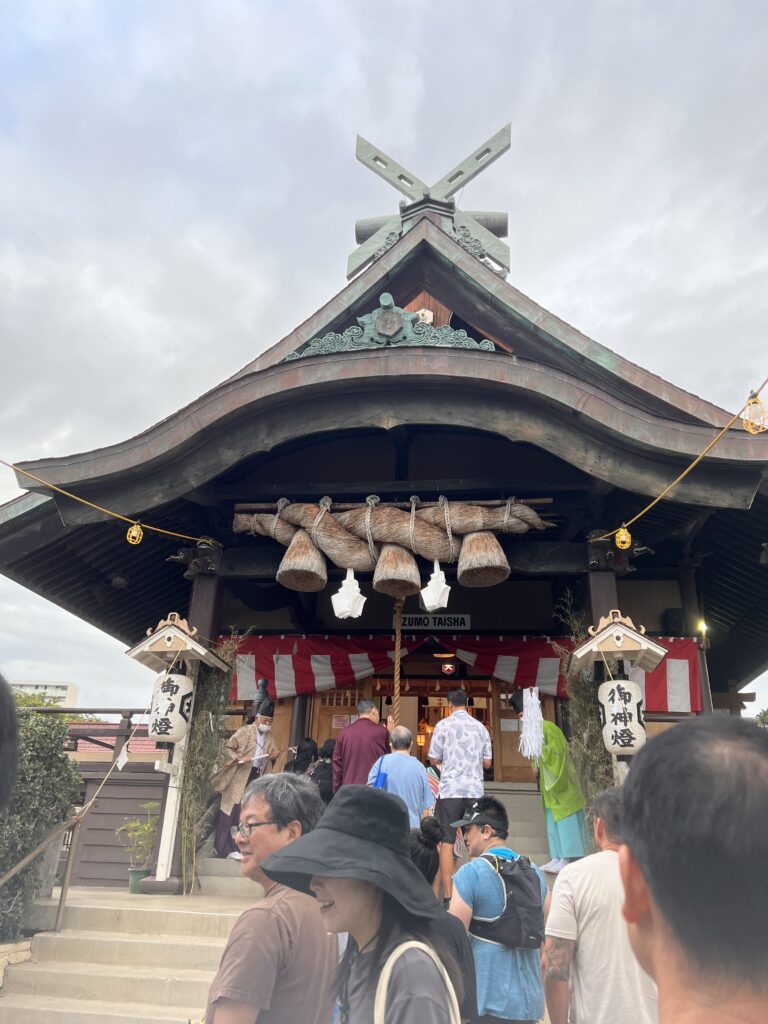
A New Head Priest and a New Direction
By the late 1980s, Hawaii Izumo Taisha faced another uncertain transition. Shigemaru Miyao was growing older and there was no successor in place.
He returned to Japan to consult with Izumo Taisha headquarters. At the time, the man who would become Hawaiʻi’s third head priest was working at the Tokyo office when someone asked whether he would consider going to Hawaii.
He thought it sounded interesting—and said yes.
He arrived in 1990.
The transition was not necessarily an easy one. His English was limited to what he had learned in middle and high school, and he quickly discovered that the English spoken in Hawaiʻi did not always sound like the English he had studied in Japan.
Yet the congregation welcomed and supported him. He successfully transitioned into his new role before Shigemaru Miyao passed away in 1993.
When the new head priest arrived, he was repeatedly told that the number of followers was declining. He was even led to believe that his role might eventually be to oversee the shrine’s closure.
The longer he remained in Hawaiʻi, however, the more optimistic he became.
He began to believe there would be another generation willing to care for the shrine.
The key, he felt, was reaching beyond its existing congregation.
He personally visited different places in the community, letting people know where Izumo Taisha was and that they could turn to the shrine when they needed a blessing.
At the same time, Hawaiʻi was welcoming large numbers of visitors from Japan. Japanese media discovered the shrine, television programs began featuring it, and its head priest became a familiar personality to viewers in Japan.
Visitors began learning about Hawaii Izumo Taisha before leaving Japan and making the shrine one of their destinations after arriving in the islands.
Even a Japanese guidebook helped spread the word. When the shrine offered to pay for an advertisement, the company declined the payment and included Izumo Taisha in its publication anyway.
A shrine once thought to be facing eventual closure had found new ways to reach people.
Celebrating 120 Years
This October, Hawaii Izumo Taisha will commemorate its 120th anniversary with a two-day celebration.
A shrine service will be held Saturday, Oct. 10, followed by a celebration luncheon at the Sheraton Waikiki Hotel on Sunday, Oct. 11.
The meaning of 120 years extends far beyond the lifespan—or accomplishments—of any one individual.
For the current Bishop Daiya Amano, the anniversary represents generations of people who have sustained the shrine. They were not only Japanese. People of many ethnicities, personalities, backgrounds and ways of thinking contributed to its survival and growth.
His appreciation reaches backward to those who came before him and forward to those who will carry the shrine into the future.
Among his most treasured memories are the people whose lives have intersected with the shrine: babies and children, couples beginning married life, families celebrating milestones and families gathering to say goodbye to loved ones.
Together, those individual moments form the history of Hawaii Izumo Taisha.
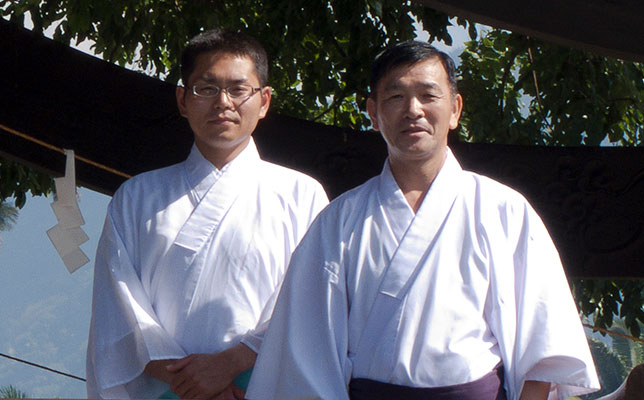
In 2011, Rev. Jun Miyasaka came from headquarters as the Assistant to the Chief Priest.
(Photo courtesy izumotaishahawaii.com)
A Bridge to the Next Generation
For many Sansei, Yonsei and Gosei Japanese Americans, Japan may no longer be a place personally remembered by parents or grandparents. Japanese may no longer be spoken at home, and traditions once practiced automatically may now require explanation.
Yet places such as Izumo Taisha offer a tangible connection to that heritage.
The immigrants who helped establish the shrine could hardly have imagined Hawaiʻi 120 years later. But something they created continues to welcome their descendants—and people from many other backgrounds—through its gates.
As the anniversary approaches, the shrine has already begun preparing for its future. A new two-story building adjacent to the shrine was recently completed, providing staff housing, a meeting room and ADA-compliant restrooms. It was a major undertaking leading up to the 120th anniversary.
Asked what the next 100 years might bring, the Bishop acknowledged that much of the recent focus has simply been on reaching this milestone. Looking ahead, renovation of the aging original structure and additional improvements to the property may be next.
Buildings, however, are only part of the story.
Hawaii Izumo Taisha has survived because one generation after another decided that what had been handed to them was worth preserving.
The Issei established it. The generations that followed protected, rebuilt and reimagined it. Today, another generation inherits that responsibility—and the opportunity to decide what this connection to heritage will mean in modern Hawaii.
After 120 years, Hawaii Izumo Taisha remains a bridge: between Japan and Hawaiʻi, between past and present, and, perhaps most importantly, between the generations who built it and those who will determine what comes next.
For more information about Hawaii Izumo Taisha, visit the website: izumotaishahawaii.com.
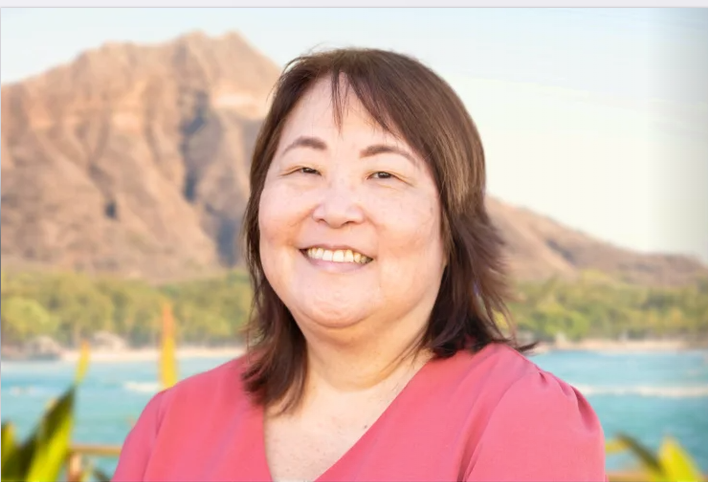
About Sharlene Fujisato: Born and raised in Honolulu, she graduated from UH Mānoa with a degree in English and built a diverse career in sales across luxury retail, technology, and funeral services—always guided by the belief that real connection is at the heart of every sale. She’s been working at Hawaii Information Service since 2021. Her husband is a retired Honolulu firefighter, and they have two children. She enjoys traveling, concerts, reading, and swimming.