From the moment Rimi Natsukawa stepped on stage for the closing performance of the 43rd annual Okinawan Festival at the Hawaiʻi Convention Center on Aug. 31, the popular Japanese singer with roots in Okinawa had the appreciative audience in rapt attention.
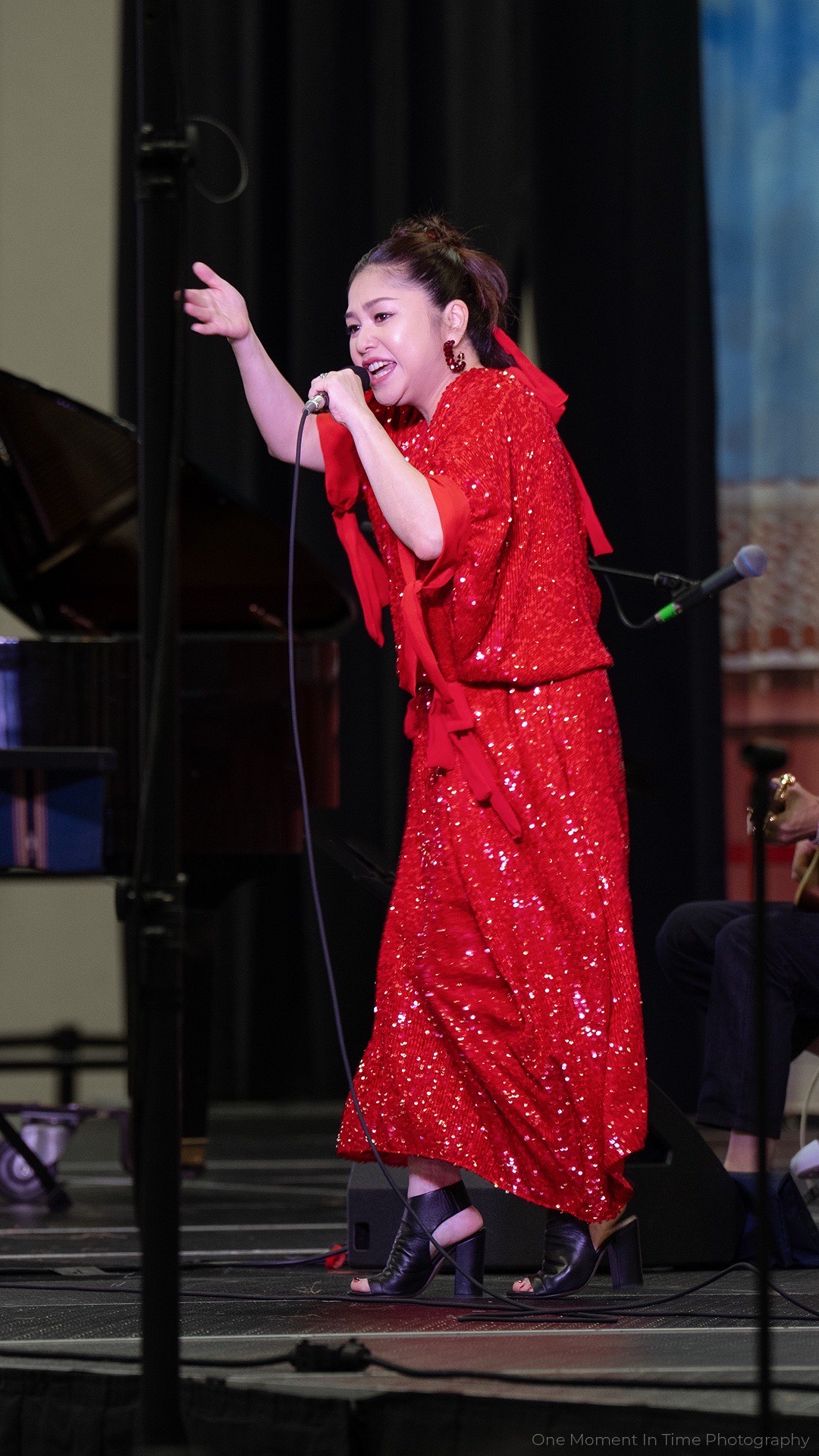
The last time Natsukawa sang at the festival was in 2017. In that year, it was still being held at Kapiʻolani Park. This year the setting was different, but Natsukawa continues to be in extraordinary vocal form. Outfitted in a shimmering red dress, she walked on stage with her two musicians (a pianist and a guitarist), waved joyfully to the audience, picked up her sanshin, and got right down to business, performing the beautiful music she is known for.
Her first song was the instantly recognizable fan favorite, “Shima Uta.” Now in her 25th year as a professional singer, Natsukawa remains as vibrant and versatile as ever, achieving a remarkable range of notes and coloring her phrasing with warmth and depth.
The next song, “Warabigami,” was relatively short but one of the most beautifully sung in her roughly one-hour set. The song is written in the tradition of an Okinawan komori-uta or lullaby and tells of a mother’s love and protection of her child, praying that the child will grow up to be an excellent human being. While singing the song, Natsukawa went through the soothing motions of rocking a baby to sleep. Although the melody has tinges of sadness to it, the song is really about hope and divine blessings. One line of the song, for example, translates to “Dear child don’t cry, accept the bright light of the sun.”
Natsukawa did not spend a lot of time with idle chit-chat during the show. When she did speak it was usually brief, but always seemed sincere. Given the limited time for her performance, she packed in the hit songs one after another. Her musicians also served as background singers, enhancing Natsukawa’s singing but never overshadowing her.
An accomplished sanshin musician and student of minyo, the Japanese folk song tradition, Natsukawa has infused Okinawan musical style into many of her songs, making her an ideal headliner for this year’s Okinawan Festival as the community celebrates the 125th anniversary of Okinawan immigrants’ arrival to Hawaiʻi to work on the sugar plantations. As noted when she was being introduced, the number “25” was significant this year in a number of ways, including being the year when she returned to the festival stage.
Her third song, “Tinsagu Nu Hana,” is often sung with a quicker beat, but Natsukawa chose a slower pace, which gave the song a more reflective and gentle quality. Like many of her songs, this one required her to reach for the higher octaves, which she accomplished with seeming ease. Natsukawa’s rendition of this song inspired a calm to fall upon the audience. The next song, “Kanayo, Kanayo” sustained that relaxed energy.
Around 20 minutes into her set, she then changed the energy from relaxed to charged with her encouragement of the audience to take part in the next song, “Asadoya Yunta,” by doing hand and arm motions associated with the kachashi dance. For those who didn’t know it, she demonstrated the motions as if opening and closing a window from side to side and from top to bottom. This was a song that many in the audience obviously knew, and they provided vocal feedback (call-and-response) at the appropriate times, making for an energetic interactive performance.
She picked up the pace even more with the spirited “Hounen Ondo,” which she performed with an electrifying beat, clicking away on the Okinawan samba, a castanet-like handheld percussive instrument. At one point she took the mic off its stand and went shimmying around the stage like a showgirl, prompting audience members to stand up and dance the kachashi in the space in front of the stage. Men, women, older adults, middle-age people, and children all got up to dance in rhythm to Natsukawa’s lively singing. This joyful spontaneity from the audience members was one of the ways they showed their appreciation and enthusiasm for the singer’s extensive line-up of familiar songs that had the power to evoke such a wide range of emotions.
For “Shimanchu Nu Takara,” six drummers dressed in traditional Okinawan costumes joined her on stage to accompany her with their resonant drumming and dancing. The audience yelled “Iya-sasa” to show their vigorous approval. After this standout performance, she said it was about time to wrap up but asked if it was okay to go on a little longer. The audience cheered her on. To their delight, she then performed one of her many signature songs, “Nada Sou Sou,” quickly followed by “Uta, Uta, Uta,” one of her more recent releases.
She and her musicians then took a bow and left the stage, as if completing the show, but the audience wasn’t having it. They erupted in vigorous applause until Natsukawa and her musicians returned. Natsukawa sang “Hana,” one of her most beloved songs. With its extreme vocal range and emotional complexity, this song requires abilities that only a well-trained professional can pull off. Natsukawa did not disappoint. The most heart-wrenching yet hopeful part of this song are its final words, “Nakinasai, warainasai” (“Cry as you like, laugh as you like”); “Itsu no hi ka, itsu no hi ka” (“Someday, someday”) “Hana wo sakasou yo” (“Let’s make flowers bloom”).
No doubt that over a quarter century in show business, Natsukawa has sung many of these songs hundreds of times, but everything sounded fresh and sincere. She exuded both extraordinary talent and a refreshing humility at the same time, establishing a quick rapport with the thousands of fans who turned out to welcome her back to Hawaiʻi.
What she should know for sure is that her fan base here in Hawaiʻi is still as strong as ever and as passionate about her music as she is. For a magical hour on a Sunday afternoon, Rimi Natsukawa brought thousands together to share in the restorative power of beautiful music. The Okinawan community should be proud of its awesome daughter of song.
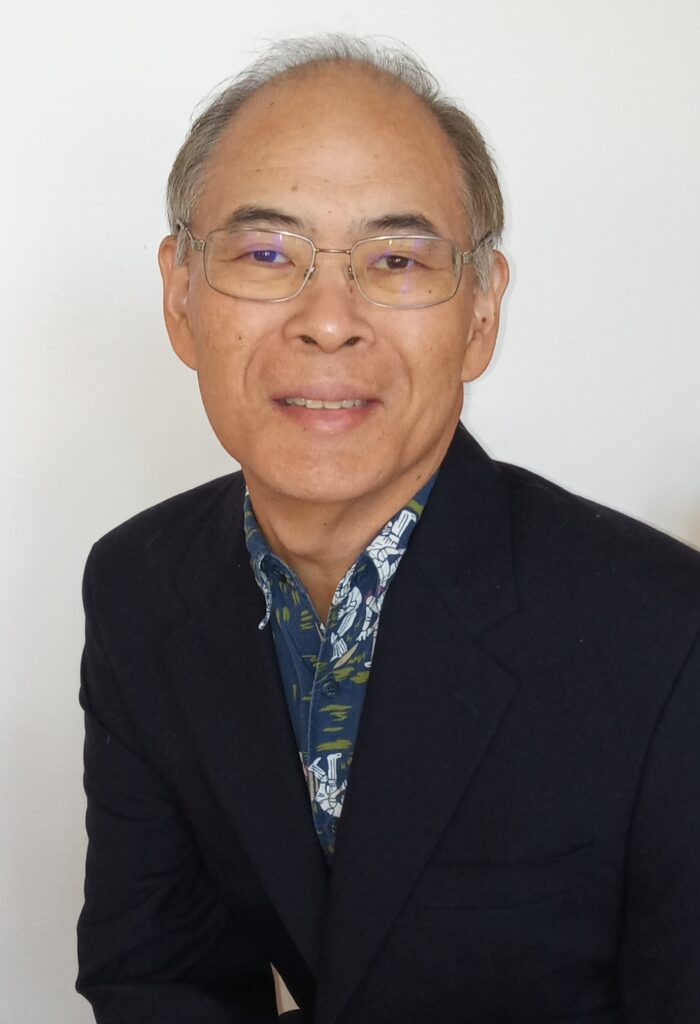
Kevin Y. Kawamoto is a former associate professor at the University of Hawaiʻi at Mānoa and
currently works at the UH Mānoa Center on Aging. He has written or co-written a number of
academic textbooks and has been a freelance writer for more than 30 years.