Some people go through life seeking fanfare and public recognition. Edward M. Kuba, while deserving of both, has consistently gotten things done—big and small—without calling unnecessary attention to himself. Yet this unassuming 81-year-old retired lawyer and former member of the University of Hawaiʻi Board of Regents has left his mark on the educational and cultural fabric of Hawaiʻi in ways that will live on far beyond his own lifetime and benefit generations to come.
Without Kuba’s leadership and determination, for example, the Hawaii Okinawa Center in the Gentry Waipiʻo Business Park might still be a pipe dream. While it took a massive effort to complete the center in 1990, that effort began years earlier with a small group of people willing to work diligently to transform an idea into reality. Doing so required strong communication skills, social networking ability (both in Hawaiʻi and Okinawa), and tenacious fundraising prowess. Kuba had all of those qualities and more. Unwilling to let naysayers deter him, he spearheaded a fundraising campaign that ultimately raised $10 million from donors in Hawaiʻi and Okinawa. At one point, more than 500 supporters were actively helping to raise funds for the planned center.
Today, more than 35 years later, the Hawaii Okinawa Center still stands strong. It serves as the home of the Hawaii United Okinawa Association (HUOA) and provides a much-needed large gathering space on the west side of Oʻahu that people of all ethnicities can rent for meetings, parties, and celebrations. The facility features a multi-purpose auditorium/theater and banquet hall. Kuba is a past president of HUOA and was instrumental in motivating hundreds of members and supporters to make the Center a reality. On the day of the building’s grand opening in 1990, he was gratified to see thousands of well-wishers gathered on the premises, including surviving Issei who were able to witness firsthand this tribute to their legacy and sacrifices.
Karleen Chinen, a retired editor of the Hawaiʻi Herald, was also present at the opening ceremony. In a reflection she penned for the Herald on the Center’s 25th anniversary, she recalled what she observed and how she felt on that special day.
“I was there in June 1990, when Issei Shoshin ‘Steven’ Nagamine, founder of the Flamingo restaurants, and Chiyeko Takushi, a pioneer insurance woman, representing the Issei generation, tugged on the maile lei, officially opening the Hawaii Okinawa Center,” she wrote. “I still get chickenskin when I reflect on that day and remember the joy on the faces of the Issei. That day, they knew in their hearts that the cultural heritage they had brought from Uchinaa would live on in their children and grandchildren and the generations beyond.” (Uchinaa is the native Okinawan word for Okinawa.)
Kuba has also been involved with the annual Okinawan Festival from its earliest days, when it was held at McCoy Pavilion in the Ala Moana area, before later moving to Kapiʻolani Park and more recently to its current location at the Hawaiʻi Convention Center. For Kuba, no job has ever been too big or too small. At one point in the festival’s history, he even volunteered to help clean public restrooms for the benefit of festival attendees. When that task was later taken over by paid union members, he simply found other ways to help alongside thousands of fellow volunteers.
As a member of the University of Hawaiʻi Board of Regents—and drawing upon his local and Okinawan contacts—Kuba helped establish the Center for Okinawan Studies at the University of Hawaiʻi at Mānoa, the only academic center of its kind in the United States. In 2018, the University of Hawaiʻi and the University of the Ryukyus in Okinawa honored Kuba with a certificate of appreciation for his role in building the partnership between the two institutions and for his continuing efforts to ensure the Center’s financial health and long-term viability. Established in 2008, the Center’s mission is to foster a deeper understanding of Okinawa’s history, language, culture, and contemporary society through programs that include student exchanges and scholarships.
More recently, Kuba has been promoting the publication of Karleen Chinen’s book, Born Again Uchinanchu: Celebrating Hawaiʻi’s Chibariyo! Story, a meticulously researched 352-page volume filled with photographs and a compelling narrative focusing primarily on the pivotal two decades between 1980 and 2000. Largely driven by Sansei, or third-generation Okinawan Americans, this period marked a powerful resurgence of Okinawan identity in Hawaiʻi.
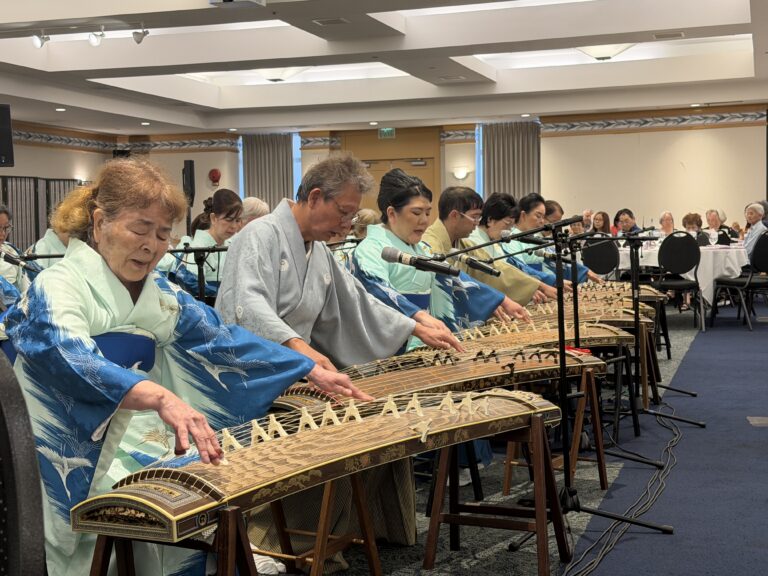
Although Kuba grew up around Okinawan culture, it was not until he lived on the continent—in Boston and New York City—that he began to fully appreciate how vital cultural pride is to a community’s social identity. Upon returning to Hawaiʻi, he joined the ranks of Okinawan Americans who not only embraced their ancestral ties but also sought to share their heritage and accomplishments with others. They were “Born Again Uchinanchu,” eager to build upon the legacy of their Issei forebears. The two-day Okinawan Festival held each August or September, for example, attracts about 50,000 people of all ages and ethnicities and serves as a major fundraiser for HUOA’s cultural and educational programs. It also showcases Okinawan song and dance, food, crafts, martial arts, scholarship, and warm hospitality, often with visitors and dignitaries from Okinawa joining the celebration.
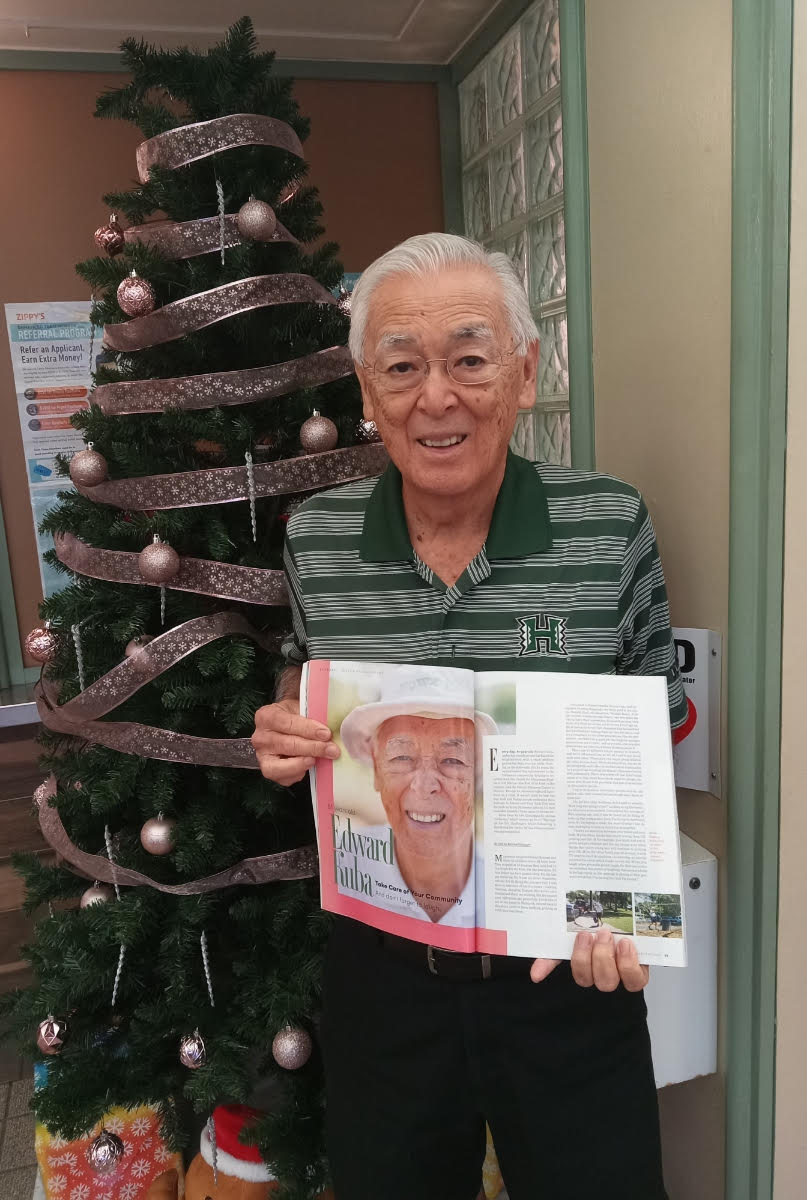
When Honolulu magazine sought inspiring elders in Hawaiʻi whose lives offered wisdom in later years, it selected Edward M. Kuba as one of six individuals to profile. (Another was former Hawaiʻi Governor John Waihee III, who is married to Uchinanchu former First Lady Lynne Kobashigawa Waihee and has known Kuba for decades.) The magazine featured a short video interview with Kuba and devoted two full pages to his profile, highlighting his daily walks around Waikīkī near his home—both for exercise and to pick up trash along the way.
Fit and sharp at 81, Kuba shared these words of wisdom with readers: “There’s a connection between your mind and your body. If your mind thinks that you’re young, then it’ll prolong your life. If, for example, you laugh and you’re active and you exercise and you act young, your mind thinks that you’re young and will continue to prolong your life. If, on the other hand, you sit around, watch TV, and don’t do anything—no exercise, no mental stimulation—your mind thinks you’re old.”
Kuba truly walks the walk each day, continuing to give back to the community in both big ways and small—not for recognition, but because it makes him feel good and helps Hawaiʻi become a better place for current and future generations. Two words come to mind in summarizing his life. One is Chibariyo!—persevere—a value that has guided him through life’s biggest challenges. The other is the Japanese concept omoiyari: selfless compassion for others. It embodies doing good not for personal gain, but so that others may benefit—sharing with kindness and positivity, all without fanfare, yet with profound impact on the Okinawan community in Hawaiʻi and beyond.
To learn more, see the Honolulu magazine story and video interview. Karleen Chinen’s book, Born Again Uchinanchu, is available through the Hawaiʻi United Okinawa Association’s online shop.
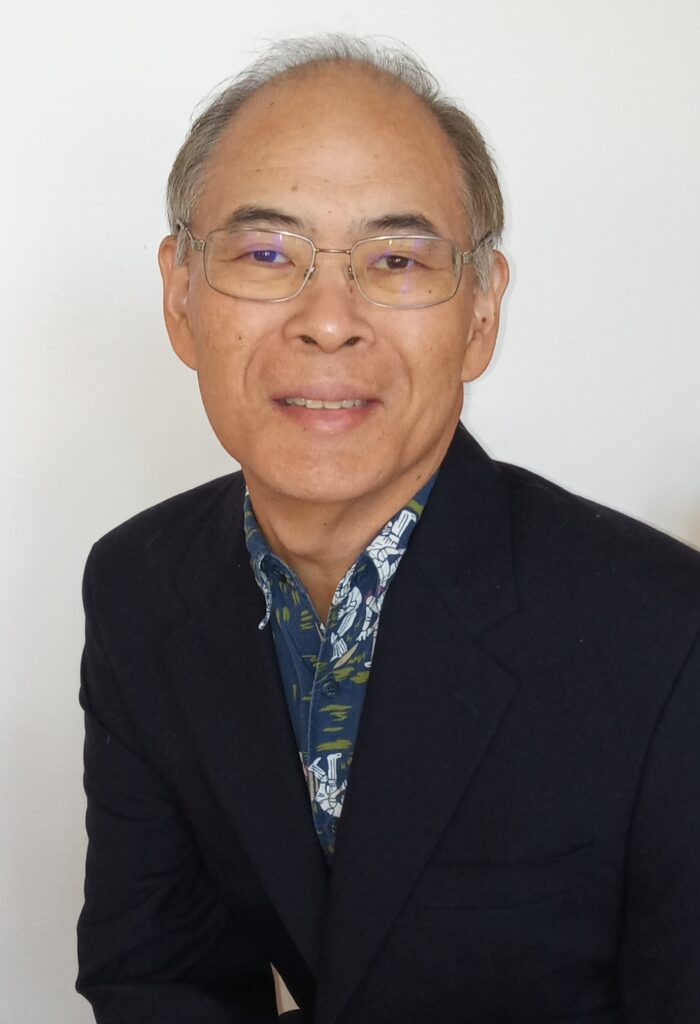
Kevin Y. Kawamoto is a former freelance writer for the Hawaiʻi Herald and a gerontological social work educator.