
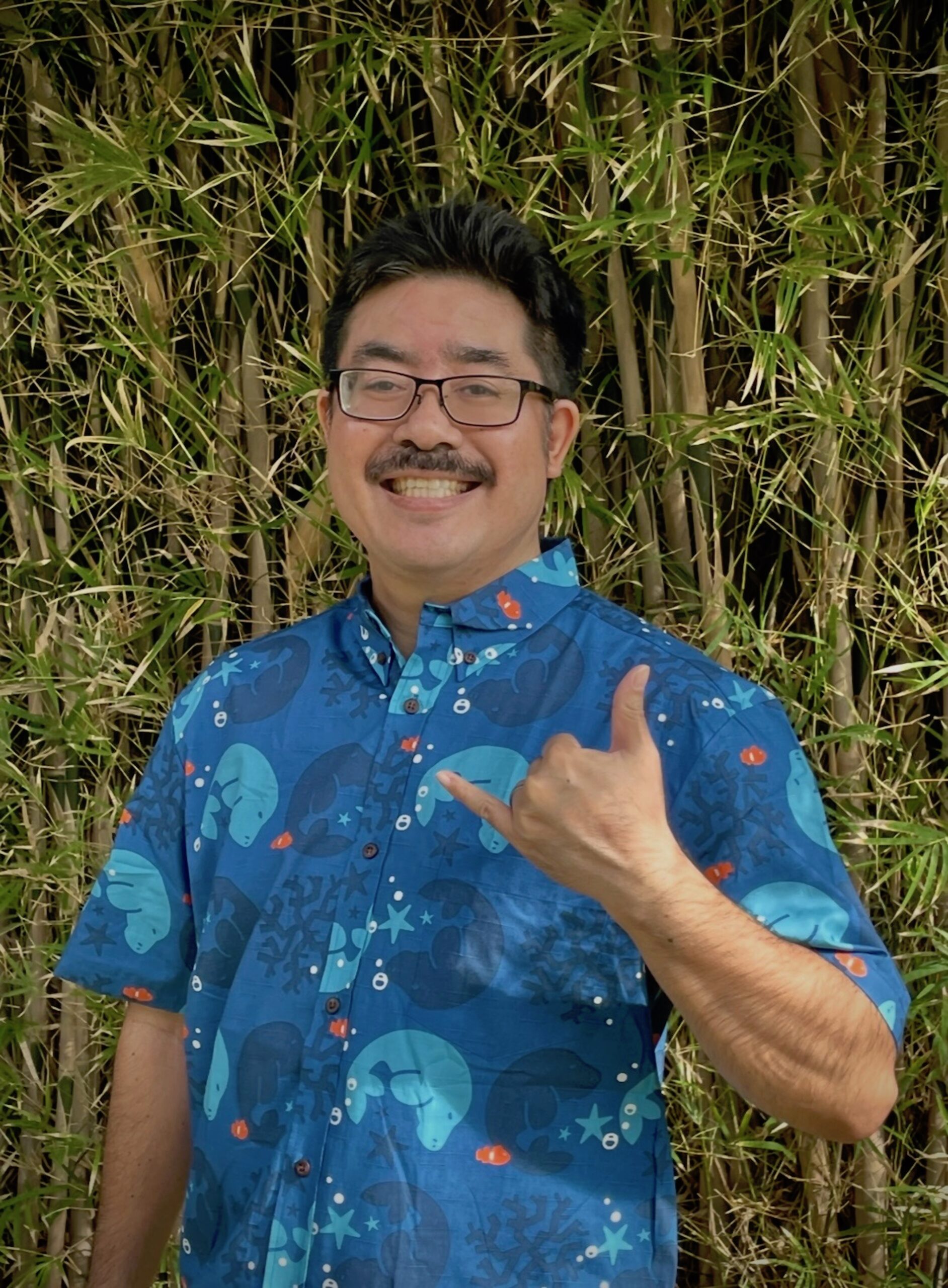
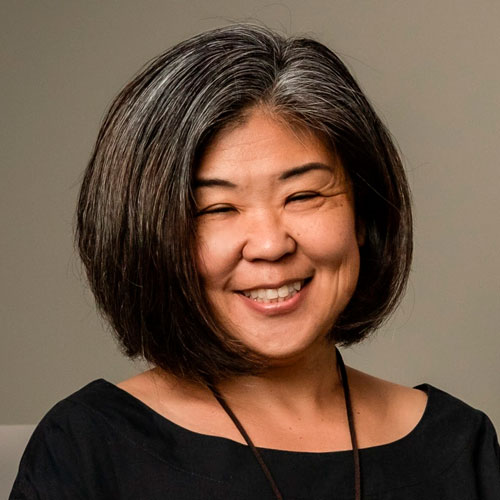
When Lee Tonouchi was appointed as the new State of Hawaiʻi Poet Laureate, it marked more than a personal milestone—it signaled a powerful affirmation of Hawaiʻi’s linguistic and cultural identity. Long known as “Da Pidgin Guerrilla,” Tonouchi has spent decades championing Hawaiʻi Creole English as a legitimate literary language, challenging assumptions and expanding the boundaries of what poetry in Hawaiʻi can sound like. His appointment recognizes not only his body of work, but also the generations of local voices who see their everyday language reflected, respected, and elevated on the state’s highest literary stage.
Beyond the page, Tonouchi has also been an important presence in Hawaiʻi’s performing arts community. He has been involved with Kumu Kahua Theatre, the Honolulu-based theater known for producing plays rooted in local culture and language. Through his writing and performances connected to the theater, Tonouchi has helped bring Pidgin storytelling to live audiences, further reinforcing that local language belongs not only in conversation, but on stage and in literature.
When asked Tonouchi about what it means to dedicate his life to changing perceptions about Pidgin. He respond, “Early on in my writing career I saw that da Pidgin talker wuz judged as being not as intelligent as da standard English talker. So da way I saw ’em wuz, I get two choice den. I could either change myself or I could try change da perception. I decided I wuz going dedicate my life to trying for change people’s perceptions about Pidgin by using Pidgin for everyting I do. I dunno how much difference I been making or not. I just know I happy I stay living Pidgin.”
As Hawaiʻi’s Poet Laureate, Tonouchi believes inclusivity is essential. He said, “Growing up talking Pidgin, I know how feels like for be silenced, for have teachers tell me that my voice no mattah. I also know how feels like for be marginalize cuz of my ethnic identity. I hundred percent Uchinaanchu and in college we wen study da various ethnic groups in Hawai‘i, but when I would raise da question, oh how come nomo no Okinawan representation in our class, Professors would dismiss ’em and tell, ‘Okinawan, Japanese, same thing.’ Das why as Hawai‘i’s Poet Laureate I hope for make space for da people who feel erased.”
Hawaiʻi is home to many layered identities and histories. Tonouchi reflects on how growing up in culturally diverse Hawaiʻi shaped his voice as a writer. “My Maui Grandma used to be sooooo shame of her Pidgin that she nevah like talk when we went out to restaurants. She always wanted me for order da food for her. To me no wuz right that she should feel shame li’dat. She had so much for be proud of an’den. But I could kinda understand cuz I wuz made for feel li’dat too. Teachers would tell me, ‘Lee, you write like how you talk.’ So den I tell, ‘Oh, das good, ah?’ And dey would shake their heads and say. ‘No, that’s bad.’”
Tonouchi also describes his vision for “talk-story poetry,” a form that invites more people into writing. “As one kid I nevah dreamed I could evah be one writer. My goal as Hawai‘i’s Poet Laureate is for encourage people for be proud of all their cultures, for be proud of who dey are. I like encourage people for write what I call ‘talk-story poetry.’ Das basically narrative poetry, but just da word narrative already sound scary, ah. People not sure if dey can write one narrative. But if I call ’em ‘talk-story poetry,’ people be all like, Oh, talk story?! I know how talk story!!”
Tonouchi continues to explore these ideas in his recent work. His newest collection, Chiburu: Anthology of Hawai‘i Okinawan Literature, highlights the voices and experiences of Hawai‘i’s Okinawan community, bringing together stories and writing that reflect the richness of Uchinaanchu heritage in the islands. He has also written for younger readers, including the children’s book Okinawan Princess: Da Legend of Hajichi Tattoos, which introduces cultural history and identity to the next generation through storytelling that is accessible and rooted in local perspective.
Through his work as a poet, educator, performer, and now as Hawai‘i’s Poet Laureate, Tonouchi continues to remind the community that language carries identity, memory, and belonging. His lifelong commitment to Pidgin affirms that the everyday voices of Hawai‘i—spoken in kitchens, classrooms, and neighborhood gatherings—are worthy not only of preservation, but of celebration on the state’s literary stage.

2 Responses
Very inspiring story!
Thank you. I am so happy you like the story!